Class Calendar | Call admissions on 415-943-2028
Find Phlebotomy Technician and EKG Technician training at BAMA Institute
Class Calendar | Call admissions on 415-943-2028
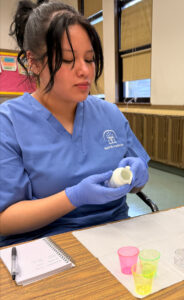
Becoming a medical assistant requires more than learning from textbooks. While classroom knowledge provides the foundation for understanding healthcare procedures, students gain true confidence when they can practice those skills in a real-world environment. That’s where hands-on labs make a powerful difference.
In a quality training program, lab-based learning allows future medical assistants to apply what they’ve learned, develop muscle memory, and prepare for the fast-paced environment of a healthcare clinic.
Healthcare is a hands-on profession. A medical assistant performs many important clinical tasks that require precision and confidence, including taking vital signs, preparing patients for exams, assisting physicians, and performing basic lab procedures.
Hands-on labs give students the opportunity to practice these skills in a safe and supportive environment before working with real patients. Instead of only reading about procedures, students can perform them repeatedly under the guidance of experienced instructors.
This type of experiential learning helps students:
By practicing these procedures in a lab setting, students can make mistakes, ask questions, and improve without the pressure of a live clinical environment.
Confidence is critical for success in healthcare. When a medical assistant feels prepared, it shows in how they communicate with patients and collaborate with healthcare teams.
Hands-on training labs simulate the types of situations students will encounter in medical offices, urgent care clinics, and specialty practices. These simulations may include:
Practicing these scenarios repeatedly helps students become comfortable performing procedures quickly and correctly. By the time they begin their externship or first job, many students already feel confident handling routine clinical responsibilities.
Hands-on labs allow students to develop many of the clinical skills required of a medical assistant. Depending on the program, students may train in areas such as:
These labs are designed to mirror real healthcare environments so students understand what to expect when they enter the workforce.
If you’re interested in becoming a medical assistant, choosing a training program with strong hands-on learning opportunities is essential.
At Bay Area Medical Academy, students gain extensive real-world practice in our 3-in-1 Medical Assisting with Phlebotomy and EKG program. Our hands-on labs are designed to help students develop confidence and master the practical skills healthcare employers expect.
Students train using industry-relevant equipment and practice important procedures like blood draws, EKG testing, vital signs measurement, and patient care techniques in a supportive learning environment.
Hands-on instruction helps students transition smoothly from the classroom to clinical settings, preparing them for successful careers in healthcare. If you’re ready to take the first step toward becoming a medical assistant, learn more about our training programs today.
"*" indicates required fields
Our career-oriented program gives you hands-on, real-world training and ongoing support for your long-term goals.
For more information on BAMA's medical assisting and phlebotomy degree programs, contact us today!
BAMA: The Bay Area's best career-oriented healthcare traning
© 2024 Bay Area Medical Academy. All Rights Reserved. Website by WindsAndWater